One of the persistent myths about vegan eating is that it’s expensive.
The expensive version exists , the specialty products, the meat alternatives, the protein powders, the boutique nut milks.
If you build your diet around those things, yes, it costs more.
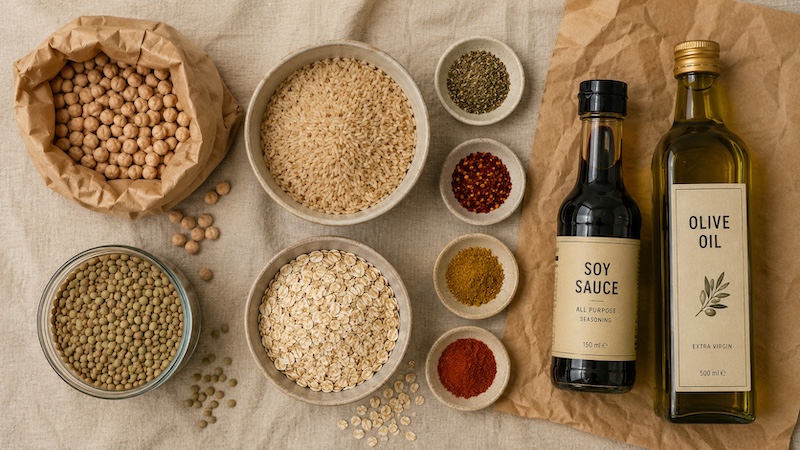
But the foundation of a well-planned vegan diet, legumes, grains, vegetables, a few key condiments, is among the cheapest food available anywhere.
The challenge isn’t cost.
It’s knowing what to buy and how to use it.
Here’s how to do it properly, in a shared kitchen, on a realistic budget.
The Cheapest Vegan Proteins
Protein is where people expect the cost to blow out. It doesn’t have to.
Dried lentils are the cheapest protein source available, full stop.
A 1kg bag costs a few dollars and makes dozens of meals.
Red lentils cook in twenty minutes with no soaking.
Brown and green lentils take longer but have more texture.
Both are nutritionally excellent.
Dried chickpeas and beans cost significantly less than canned.
The trade-off is soaking time, most need to soak overnight and then cook for an hour or more.
If you’re batch cooking on a Sunday, the time cost is minimal and the saving is real.
Canned legumes are the convenience option
Still affordable, a can of chickpeas or black beans costs under two dollars and covers a meal.
Worth keeping as backup even if you’re cooking dried most of the time.
Tofu is moderate in price and extremely versatile.
Firm tofu from an Asian grocer is almost always cheaper than supermarket tofu.
Worth checking.
The Staples Worth Buying in Bulk
A few ingredients are worth buying in larger quantities because you’ll use them constantly and the per-unit cost drops significantly.
Brown rice and oats in 5kg bags.
Both store for a long time and form the base of a huge number of meals.
Olive oil in a larger bottle.
You’ll use it every day.
The per-litre cost of a 2L bottle versus a 500ml bottle is significantly lower.
Soy sauce or tamari.
A large bottle lasts months and adds flavour to almost everything.
Nutritional yeast.
A larger bag from a health food store or online is substantially cheaper per gram than the small supermarket containers.
Spices in bulk from an Asian grocer or bulk food store, cumin, coriander, turmeric, smoked paprika, chilli flakes.
A fraction of the cost of supermarket spice jars, usually fresher, and you use the same amount.
The Things Not Worth Buying
Meat alternatives are expensive, often highly processed, and not necessary for a nutritious vegan diet.
Useful occasionally as a transition food or for convenience, not as a staple.
Specialty vegan cheeses are expensive and mostly not worth it unless you’ve found a specific one you love.
Nutritional yeast does much of the same flavour work for a fraction of the cost.
Individual portion snacks marketed as vegan, bars, chips, cookies, carry a premium for the label.
Fruit, nuts, and rice cakes are cheaper and just as convenient.
A Week of Budget Vegan Meals
To make this concrete: here’s a week of meals built on cheap ingredients.
Monday: Red lentil dal with brown rice.
Tuesday: Black bean tacos with corn tortillas, salsa, and whatever vegetables are in the fridge.
Wednesday: Pasta with a tomato and white bean sauce.
Thursday: Vegetable and chickpea curry with rice.
Friday: Stir fry with tofu, vegetables, and soy sauce over rice.
Saturday: Big grain bowl with whatever’s left in the fridge.
Sunday: Lentil soup with bread.
The expensive vegan diet is a choice, not a requirement.
More practical strategies for vegans in non-vegan households, every week in The Minority Report.
Free to subscribe. No spam.