This is one of the most common situations for vegans who didn’t go vegan with their partner:
you’ve changed,
they haven’t,
and it’s not clear they ever will.
Maybe they’re supportive but not interested.
Maybe they’re a bit resistant.
Maybe they think it’s a phase.
Maybe they’re genuinely fine with it but don’t want to change their own eating.
Whatever the specific flavour of your situation, the question is the same: how do you build a shared life with someone who eats completely differently from you, without it becoming a source of constant friction?
The Relationship Dynamics First
Before we get into the practical stuff, the relationship part matters more than the meal planning.
Your partner doesn’t have to understand your choice.
They don’t have to agree with it.
They don’t have to be enthusiastic about it.
What they do need to do is respect it, and what you need to do is let them have their own choices without making them feel judged for it.
That sounds simple.
In practice it’s one of the harder things, because when you’ve changed the way you eat for reasons that feel important to you, watching someone else not change can feel uncomfortable.
Like you’re doing the hard work alone.
Like they don’t take it seriously.
That feeling is real.
But acting on it, commenting on their food, pushing information at them, expressing disappointment when they order a steak, will corrode the relationship faster than any dietary difference.
The agreement that works is simple: you don’t comment on their food, they don’t comment on yours.
If they want to know more about why you eat the way you do, they’ll ask.
The Practical Household Stuff
Cooking:
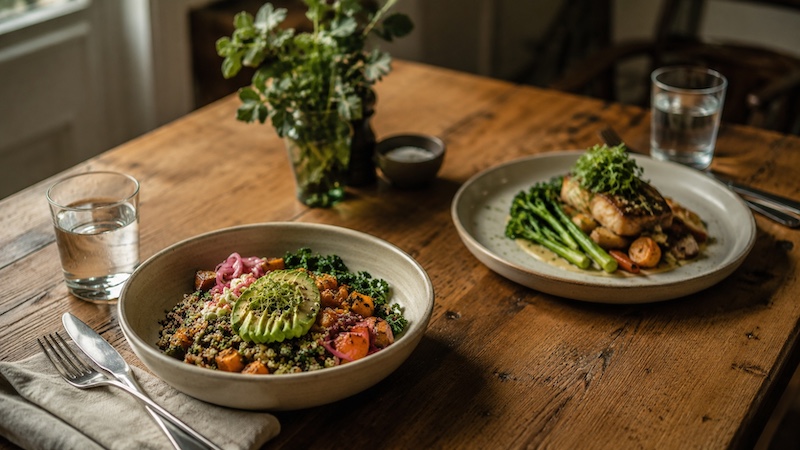
The base meal method (see Post 1) handles most dinners.
You build from a shared base and diverge at the protein.
One meal, two outcomes.
This is genuinely workable long-term once you’ve done it a few times and it becomes habit.
Shopping:
Shop separately for your specialist items, your tofu, your plant milk, your legumes.
The shared shop covers the neutral stuff that works for everyone.
This keeps the grocery logistics from becoming a negotiation every week.
The fridge:
Designate a shelf or section that’s yours.
Not because you’re being precious about it, but because it’s practical.
You know where your food is.
You’re not fishing through someone else’s groceries.
Eating out:
Most restaurants have vegan options now, even if they’re not labelled as such.
Check menus before you go, ask when you arrive, and don’t make it the whole conversation.
Most partners who eat differently are happy to eat at restaurants that work for both people, the veggie place with the good cocktails is usually a fine compromise.
When It Gets Harder
The harder moments tend to cluster around a few situations.
When they buy something specifically because you can’t eat it.
This feels pointed even when it’s not intended that way.
It usually means they’re feeling defensive about their own choices and it’s coming out in a weird way.
Don’t make it a big deal.
Let it go.
When their family makes it an issue.
Family gatherings can be complicated when extended family is vocal about your choice.
The rule here is that your partner handles their family.
You handle yours.
You shouldn’t have to defend your diet to their relatives, that’s their job to manage.
When you cook for them and feel resentful about it.
If you’re cooking non-vegan food for your partner and feeling resentful, that’s worth talking about.
It’s a reasonable thing to negotiate, maybe they cook for themselves some nights, maybe you cook vegan and they add their own protein, maybe you take turns.
There are options.
Quiet resentment isn’t one of them.
The Long View
Most couples in this situation find a rhythm within a few months.
The initial awkwardness settles.
The logistics become habit.
The dietary difference becomes just a fact of life rather than a daily negotiation.
Some partners do eventually reduce their meat consumption or move toward plant-based eating over time, not because of pressure, but because good food is persuasive and proximity to a vegan kitchen means eating a lot of incidentally vegan food.
Some don’t change at all.
Both are okay.
What you’re building is a shared life with different plates.
Plenty of couples manage it.
You will too.