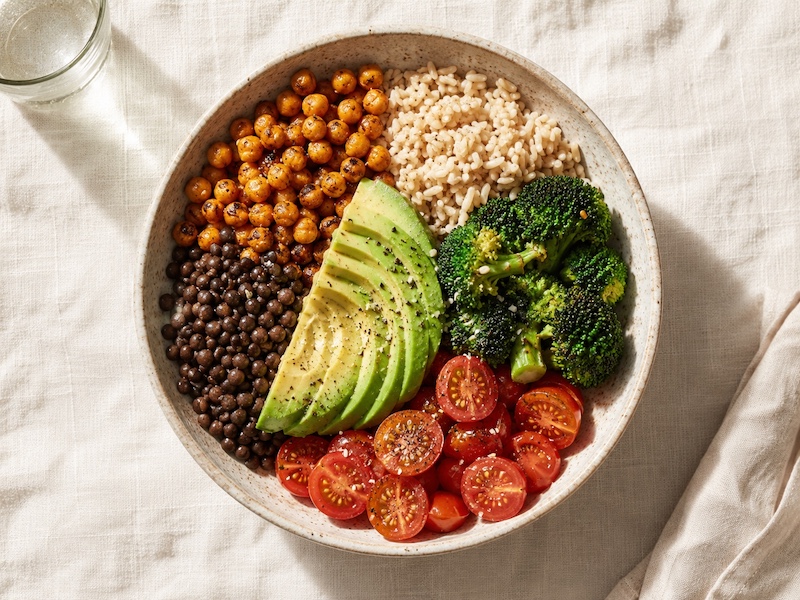
This question comes up every time you tell someone you’re vegan.
From family, from friends, from your doctor occasionally.
“But is it actually healthy? Are you getting everything you need? Isn’t it too restrictive?”
There’s a lot of noise around this topic, from both sides.
Vegan advocates who claim a plant-based diet will cure everything.
Sceptics who insist you can’t possibly be healthy without animal protein.
The reality is more useful and less dramatic than either extreme.
Here’s what the evidence actually says.
What the Research Consistently Shows
Well-planned vegan diets are nutritionally adequate and associated with a range of health benefits.
This is the position of major dietetic organisations including the Academy of Nutrition and Dietetics.
Specifically, research consistently finds that people eating plant-based diets tend to have lower rates of heart disease, type 2 diabetes, certain cancers, hypertension, and obesity compared to populations eating omnivorous diets.
They also tend to have lower BMI on average.
A large body of research, including long-running studies like the Adventist Health Studies, has found associations between plant-based eating and longer life expectancy.
This is robust, consistent evidence.
It’s not from fringe journals or funded by advocacy groups.
It’s mainstream nutrition research.
What the Research Also Shows
A vegan diet is not automatically healthy.
A diet of chips, soft drink, and processed vegan snacks is technically vegan.
It is not healthy.
The health benefits associated with vegan diets in research are specifically linked to whole food plant-based eating, vegetables, legumes, wholegrains, fruits, nuts, and seeds.
The further you get from that and towards processed foods, the weaker the benefits.
The nutrients that require attention on a vegan diet are real.
B12 is the main one, there is no reliable plant source, and deficiency is serious.
Omega-3, vitamin D, calcium, iodine, and iron all require some attention, though all are manageable through diet and targeted supplementation.
A poorly planned vegan diet has real risks.
A well-planned one does not.
The Protein Question
You will be asked about protein constantly.
Here’s the short answer.
Protein deficiency on a varied vegan diet that includes legumes is extraordinarily rare.
Legumes, lentils, chickpeas, black beans, edamame, tofu, tempeh, are excellent protein sources.
Wholegrains contribute meaningfully.
If you’re eating legumes at most meals, you’re almost certainly getting enough.
The longer answer involves the concept of complete versus incomplete proteins, animal proteins contain all essential amino acids in one source, while plant proteins generally don’t individually.
But this is much less significant than it sounds.
As long as you’re eating a variety of plant foods across the day, your amino acid intake across meals covers all the essentials.
You don’t need to carefully combine proteins at every meal.
What to Actually Do With This Information
Eat whole food.
Make legumes the centre of most meals.
Eat plenty of vegetables, wholegrains, and nuts.
Take a B12 supplement.
Get your vitamin D checked.
Eat ground flaxseed for omega-3.
If you have a specific health condition, work with a doctor or dietitian who understands plant-based nutrition to address your particular needs.
Beyond that: the research is on your side.
Not because veganism is magic, but because a diet built around vegetables, legumes, and wholegrains is consistently associated with good health outcomes across a large body of evidence.
The next time someone asks if it’s actually healthy, you can tell them: when it’s done well, yes.