If a health scare is what brought you here, you’re probably approaching this differently from someone who went vegan for ethical reasons.
You’re not doing this because of a documentary.
You’re doing it because a doctor said something, or you saw a number on a test result, or you felt something in your body that scared you.
And now you’re trying to figure out what to actually eat.
This post is for you specifically. Not the broad “here’s how to go vegan” advice. The practical, first-month, what-goes-on-my-plate guidance.
What Most Vegan Advice Gets Wrong for Your Situation
Most vegan content is written for people who are already healthy and making an ethical choice. The nutritional priorities are different.
If you’ve had a cardiac event, your priorities are different from someone managing an autoimmune condition.
If you’re dealing with type 2 diabetes, you need different guidance than someone who went vegan to lose weight.
If you’ve been diagnosed with cancer, the considerations are different again.
This post covers the broad foundations.
For your specific condition, working with a doctor or dietitian who understands plant-based nutrition is genuinely worth it, not because a vegan diet is risky, but because the details matter and they can look at your specific numbers.
The First Month: Keep It Simple
The biggest mistake people make in the first month is trying to replicate everything they used to eat with vegan alternatives, while simultaneously learning a whole new way of cooking, while managing whatever health issue brought them here.
That’s too much at once.
The first month is about building a foundation.
Simple, whole, nutritious food that covers your bases.
You can get more creative in month two.
Breakfast options that work:
- Oats with plant milk, a tablespoon of ground flaxseed, and whatever fruit is around.
Flaxseed adds omega-3s and fibre. Important for most health conditions. - Wholegrain toast with nut butter and banana.
Simple, filling, good energy. - Smoothie with leafy greens, frozen berries, plant protein powder if you want it, and plant milk.
Lunch options:
- A big salad with a grain base (brown rice, quinoa), plenty of legumes (lentils, chickpeas, black beans), and a tahini or olive oil dressing.
- Soup. A big batch of lentil soup or vegetable and bean soup covers multiple lunches.
- Leftovers from dinner.
Dinner options:
- Stir fry with tofu, vegetables, and brown rice.
- Lentil or bean curry with wholegrain rice or flatbread.
- Pasta with a tomato-based sauce loaded with vegetables and white beans.
- Baked sweet potato with black beans, salsa, and avocado.
Notice the pattern.
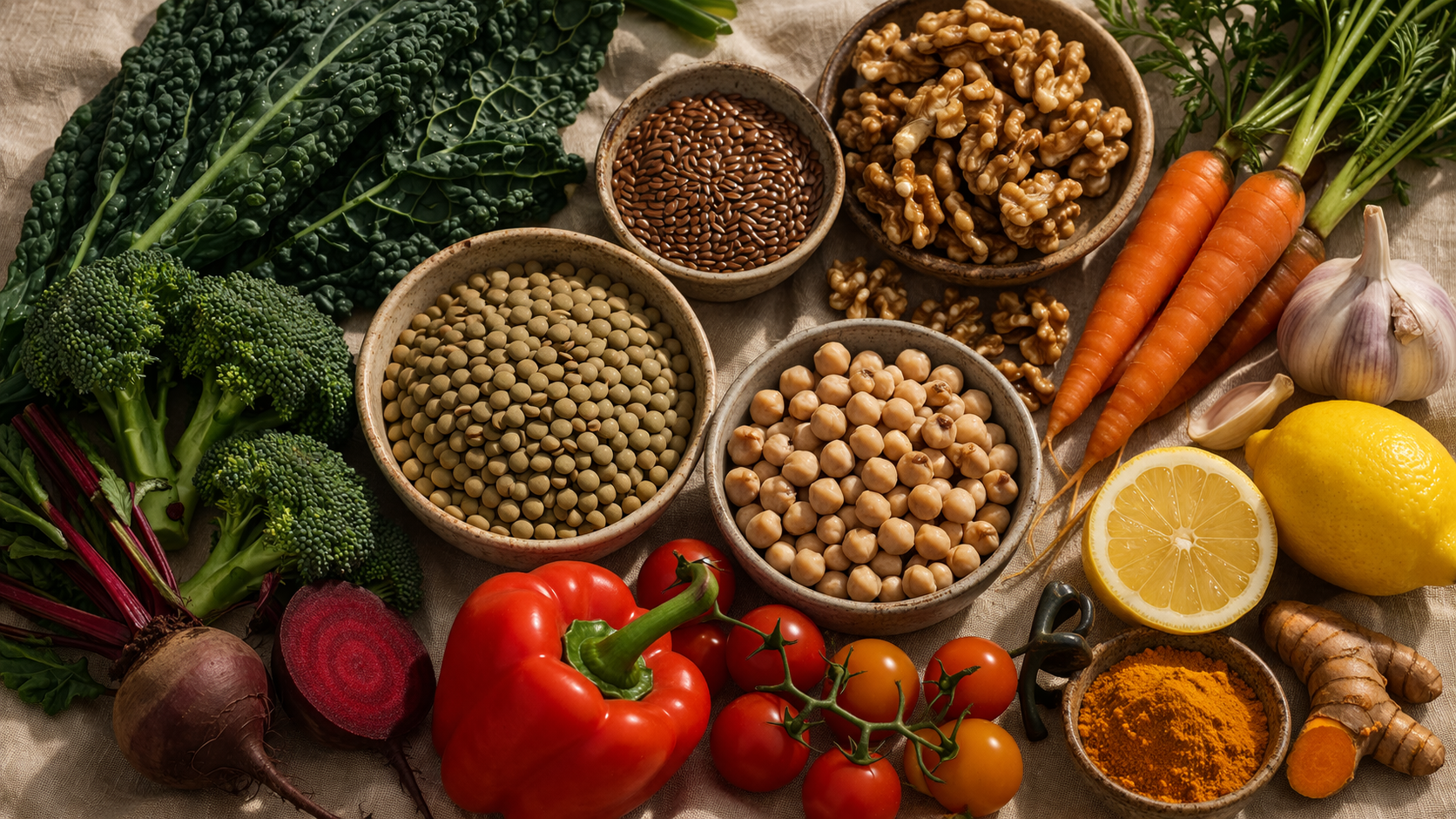
Vegetables plus legumes plus wholegrains.
That combination covers most of your nutritional bases and is what the research consistently points to for most of the conditions that lead people here.
The Nutrients Worth Paying Attention To
Protein: Easier to get than most people think if you’re eating legumes regularly. Aim to have a legume of some kind at every meal, lentils, chickpeas, black beans, tofu, tempeh, edamame.
B12: This is the one you must supplement. There’s no reliable plant source of B12. Get a B12 supplement and take it. This is non-negotiable.
Omega-3: Eat ground flaxseed, chia seeds, or walnuts daily. If you want an algae-based omega-3 supplement (which cuts out the fish middleman), that’s worth considering for heart health in particular.
Iron: Legumes, dark leafy greens, and wholegrains all contain iron. Eat them with vitamin C, a squeeze of lemon, a side of capsicum, to help absorption. Avoid tea or coffee right around meal time as they reduce iron absorption.
Calcium: Fortified plant milks, tofu set with calcium, leafy greens like kale and bok choy, and tahini all contain good amounts of calcium.
Vitamin D: Not specific to veganism, most people are deficient regardless of diet. Get your levels checked and supplement if needed.
Talking to Your Doctor
Not all doctors are familiar with plant-based nutrition, and some will be sceptical. That’s changing, but it’s still the reality in many practices.
You don’t need their approval.
But you do need them to monitor your numbers. Ask for a blood test at the three-month mark, iron, B12, vitamin D, and whatever markers are relevant to your specific condition.
The results will tell you clearly if anything needs adjusting.
If you’re on medication that interacts with diet, statins, blood thinners, diabetes medication, this is particularly important.
Some plant foods (grapefruit, large amounts of leafy greens for people on warfarin) can interact with specific medications.
Check with your pharmacist.
The First Month in Practice
Week 1: Focus on learning three or four meals you can make confidently. Don’t try to learn everything at once.
Week 2: Add a new meal or two. Start building your pantry staples, canned legumes, dried lentils, grains, nut butters, tahini, plant milk.
Week 3: You’ll start to feel more settled. The panic of not knowing what to eat begins to ease. This is when you can start experimenting a bit.
Week 4: Look back at what you’ve been eating. Where are the gaps? What do you need more of? What’s working?
By the end of the first month, this should feel less like a crisis diet and more like a way of eating you can sustain. That’s the goal.